Tagged: Meta advertising strategy
The Biggest Mistakes Businesses Make When Boosting Posts
- by Alicia Kurz
You post something on Facebook or Instagram, it gets a little engagement, and then Meta gives you that tempting button: Boost Post.
For $20, you can reach thousands more people. Sounds pretty good, right?
This is where a lot of businesses get introduced to social media advertising. Pick an audience, throw $50 behind a post, let it run for a week and hope that somewhere in those thousands of additional views is a person who wants to buy something.
Sometimes it even works!
The problem is that boosting a post and building a proper Meta advertising campaign are two very different things. Boosting isn't necessarily bad, but it's incredibly easy to spend money without having much of a strategy behind what you're doing.
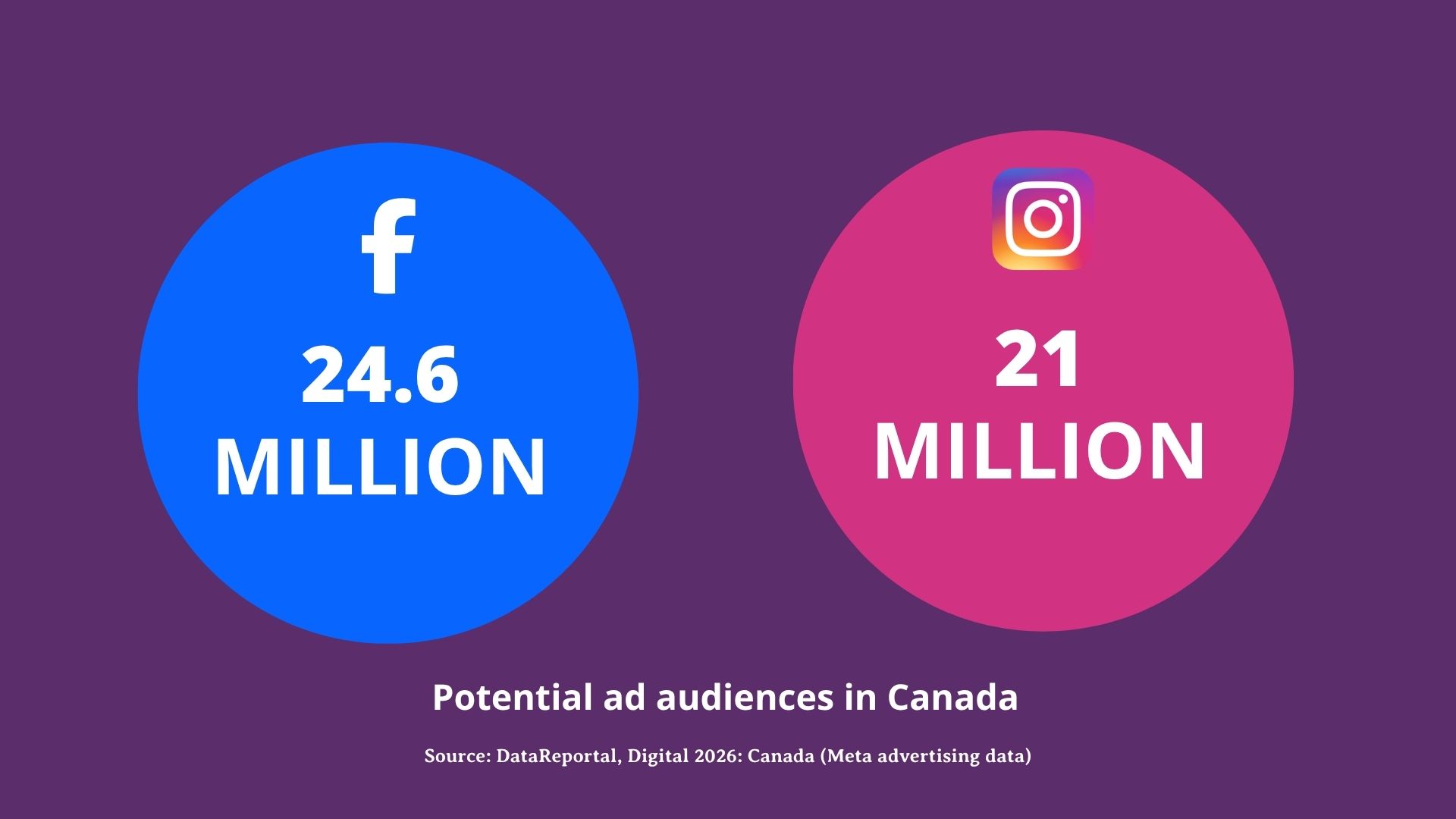
And there are A LOT of people you could potentially be spending that money to reach. Meta's advertising tools indicated that Facebook had a potential advertising audience of 24.6 million people in Canada in late 2025, while Instagram had 21 million. Instagram's potential Canadian ad reach also increased 10.8% between October 2024 and October 2025.
With an audience that big, "show this to more people" probably shouldn't be your entire strategy.
1. Boosting Every Post That Performs Well
A post getting lots of likes doesn't automatically make it a good ad.
Maybe you posted a funny Reel that people loved or a photo of your staff that received more engagement than usual. That's great organic content, but before you put money behind it, think about what you actually want people to do after they see it.
If the answer is "I don't know, but more people will see it," you probably don't need to boost it.
There are times when awareness IS the goal, but most businesses have a limited advertising budget. Before spending it, figure out what you're trying to accomplish and choose your content accordingly.
2. Letting Meta Choose Everything
Meta makes boosting incredibly easy for a reason.
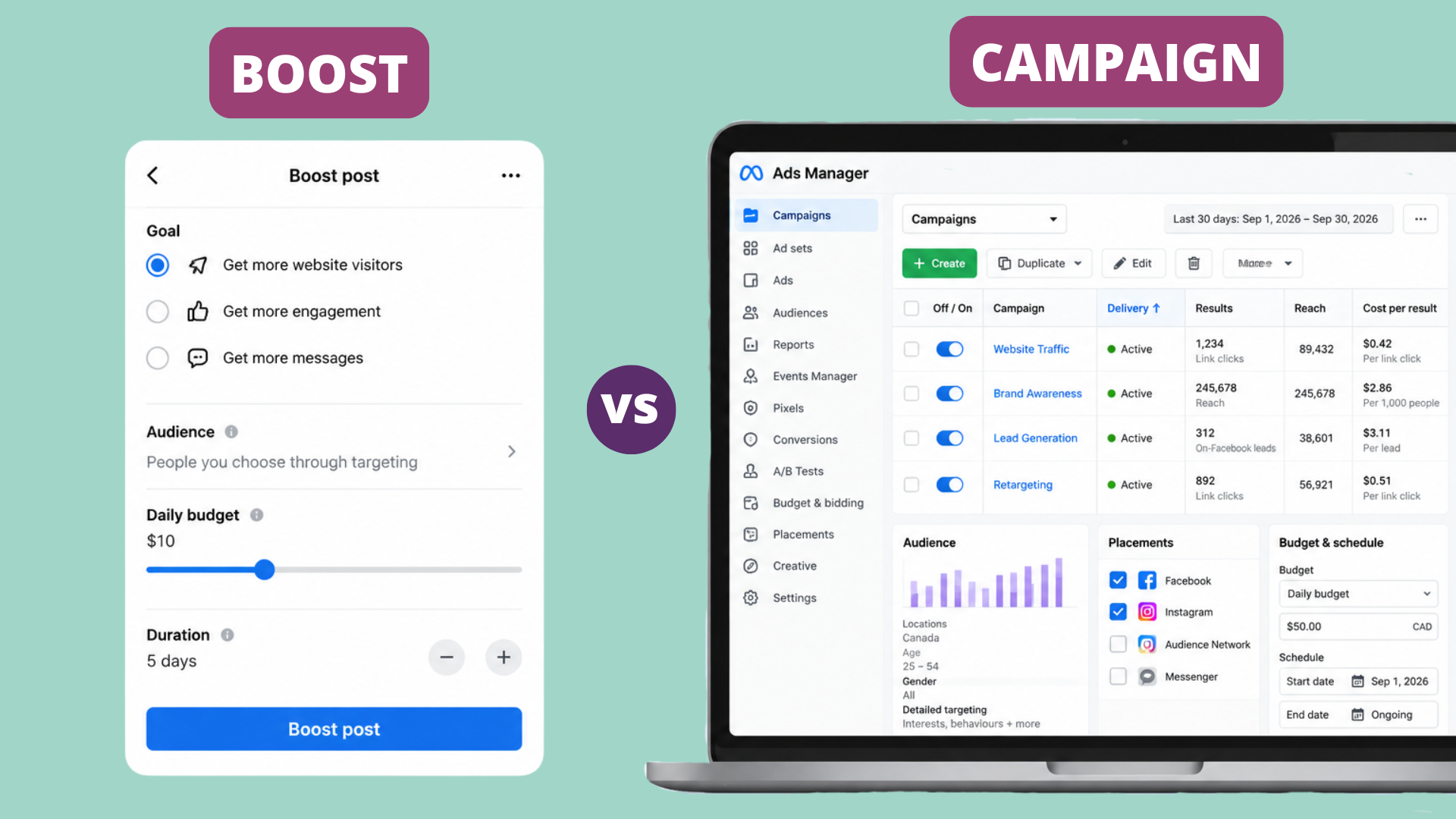
You can choose your goal, audience, budget and how long you want the boost to run without ever opening Ads Manager. That's part of the appeal, especially if you've never run an ad before.
Convenient? Absolutely.
But you're still spending real advertising dollars.
Meta describes boosted posts as the simplest way to advertise on Facebook, while Ads Manager offers more advanced customization options. That's an important distinction if boosting has gone from something you occasionally do with $20 to a regular part of your marketing budget.
Take some time to think about who you actually want to reach and what you want them to do instead of clicking through the setup as quickly as possible.
3. Choosing the Wrong Goal
This is probably one of the biggest problems we see.
Meta's advertising system is built around objectives. If your goal is engagement, you're asking the system to find opportunities for engagement. If you want traffic or another business outcome, your campaign needs to be set up with that in mind.
Getting 400 likes on an ad might look impressive, but if your actual goal was to sell tickets and nobody clicked through to buy one, those likes aren't doing much for you.
Before you spend anything, decide what success actually looks like. More people seeing your business? Website traffic? Messages? Leads? Sales?
Your advertising goal should match your business goal as closely as possible.
4. Targeting Everyone
"My customer could be anyone!"
We hear you, but unless you sell oxygen, that's probably not entirely true.
One of the biggest advantages of digital advertising is the ability to think strategically about who you want to reach. If you're paying for advertising, you probably don't want to spend your entire budget reaching people who have very little chance of becoming customers.
Think about your current customers. Where do they live? How old are they? What are they interested in? Is your service relevant to everyone in Manitoba, or are most of your customers within 20 kilometres of your business?
You don't need to narrow your audience down to seven people, but "everyone aged 18-65+" usually isn't much of a strategy either.
5. Using the Same Audience Every Time
On the other side of the targeting problem is setting up one audience and using it forever.
Your audience should depend on what you're promoting.
The people you want to reach with an introductory offer might be completely different from the people who already know your business. Someone who visited your website last week is also in a very different position than someone hearing about you for the first time.
Meta advertising offers options such as Custom Audiences for reconnecting with people who already know your business and Lookalike Audiences for finding new people with similarities to an existing audience.
If you're spending money regularly, this is where moving beyond the Boost button can give you more options for how you use that budget.
6. Putting Money Behind a Post That Wasn't Made to Be an Ad
We love organic social media, but organic posts and ads have different jobs.
Your regular content might introduce your staff, share something funny or show what happened around the office this week. Not every post needs a strong sales message because that would get annoying VERY quickly.
An ad usually needs to work harder.
Someone seeing it might have absolutely no idea who you are. Your creative, copy and call to action need to give them enough information to understand what you're offering and why they should care.
Before boosting an existing post, look at it from the perspective of someone who has never heard of your business before. Does it still make sense?
This is especially important with video. Meta reports that campaigns using 9:16 Reels ads with audio and key messages placed in the safe zone saw a 34.5% lower cost per result than campaigns using image ads in its cited tests. That doesn't mean every ad needs to be a Reel, but it does show why the creative you choose deserves more thought than simply boosting whatever happens to already be on your feed.

7. Spending $20 and Deciding Meta Ads Don't Work
We love a $20 budget as much as the next person, but you need realistic expectations about what it can accomplish.
If you boost one post for three days, don't get any sales and decide Facebook advertising doesn't work for your business, you haven't really given it much of a chance.
Advertising involves testing. Different creative can perform differently. So can your copy, audience, offer, objective and placement.
Meta's advertising tools include A/B testing for exactly this reason. You can compare different approaches and use the results to make decisions instead of relying on a hunch about what people will like.
That doesn't mean you should keep dumping money into an ad that clearly isn't working. It means you need enough information to figure out WHY it isn't working and make adjustments.
8. Only Looking at Likes
Your boosted post got 176 likes. Great!
Did anyone click your website?
This is where advertising can get a little more complicated than the numbers that are easiest to see.
If you're running ads to generate website traffic, leads or sales, those are the results you should be paying attention to. Depending on the campaign, that could include cost per result, click-through rate, landing page views, leads or conversions.
The metrics that matter depend on what you were trying to accomplish in the first place, which brings us right back to having a goal before you hit Boost.
So, Should You Ever Boost a Post?
Sure!
Boosting can be useful when you have a strong organic post and simply want more people to see it. It's relatively easy, doesn't require much advertising knowledge and can be a perfectly reasonable option when increased visibility is actually what you're looking for.
Where we start to have an issue is when a business is spending hundreds or thousands of dollars boosting posts throughout the year without looking at the bigger picture.
At that point, you're advertising. You might as well have a strategy.
Ads Manager gives you more control over things like campaign objectives, audiences, placements, creative and testing. Yes, there are more buttons to click, and Meta certainly doesn't make all of those buttons easy to understand, but having that additional control gives you more information to work with when you're deciding what to do next.
Before you hit Boost on your next post, ask yourself what you want that money to accomplish. If you have a clear answer, you're already off to a much better start.
If your current Meta advertising strategy consists mostly of hitting the Boost button and hoping for the best, get in touch with Starling Social. We can help you build campaigns around what you actually want your marketing to accomplish.