Tagged: IWD2026
Why IWD 2026 Matters More Than Ever
- by Luke Thiessen
It’s almost time for International Women’s Day, a global moment to celebrate the achievements of women while recognizing the work that still lies ahead in the pursuit of true equity. On Sunday, March 8, communities around the world will highlight the progress made and shine a light on the challenges women continue to face.
As a women-founded business, Women’s Day holds a special place in the hearts of the Starling Social team. Each year, we use this moment to reflect, to educate, and to share tangible ways you can show up to make a difference.
Why IWD 2026 matters more now than ever
.png)
The numbers show we’re not there yet
Despite decades of progress, gender inequality remains deeply entrenched in everyday life and in systems of power. According to figures from the UN, women hold just 30 per cent of managerial roles and continue to shoulder more than twice the amount of unpaid domestic and care work as men. At the current pace of change (as of 2023), it could take roughly:
- 300 years to eliminate child marriage
- 286 years to close gaps in legal protections and repeal discriminatory laws
- 140 years to achieve equal representation in workplace leadership
- 47 years to reach parity in national parliaments
Progress is happening, but far too slowly.
Women are still fighting for autonomy over their bodies
Across the globe, 43.7% of women lack autonomy over their sexual and reproductive health and rights. In the United States, reproductive rights have faced significant setbacks under the Trump administration after the elimination of nationwide protections for abortion, further restrictions to access (even in states where it is legal), and the sowing of distrust in proven science.
Furthermore, over 35% of women between 15 and 49 years old have experienced physical and/or sexual intimate partner violence or non-partner sexual violence. These realities make it clear that bodily autonomy and safety are not guaranteed.
Global backlash against women’s rights is increasing
Around the world, women and girls are facing growing and coordinated pushback against the rights they have fought hard to secure. Governments are introducing regressive laws, withdrawing from international agreements, and weakening the very institutions meant to protect equality. At the same time, opposition to gender justice is intensifying, fueling attacks on 2SLGBTQIA+ communities, promoting harmful practices such as child marriage and female genital mutilation, and spreading misinformation that distorts feminism and weaponizes “family values.” This moment calls for urgent action, with governments stepping up to defend human rights, strengthen protections, and actively counter the backlash against gender equality.
New threats to women continue to emerge
This last year has brought about new, chilling advancements in AI and generative technologies that now put women at risk of tech-enabled sexual abuse. xAI’s Grok is being used to produce non-consensual sexually explicit images of people, primarily women and children. The creation of these images is sexual violence, and highlights the need for gender-aware AI safety standards and stronger platform accountability. Alongside new technologies, digital surveillance, non-consensual image sharing, and harassment still permeate online spaces.
These are just some of the issues impacting women and girls today. Paired with an increase in global crises, economic exclusion and poverty, and emerging threats like funding cuts to women’s organizations, it is clear that we are at a tipping point where women’s rights must be prioritized.
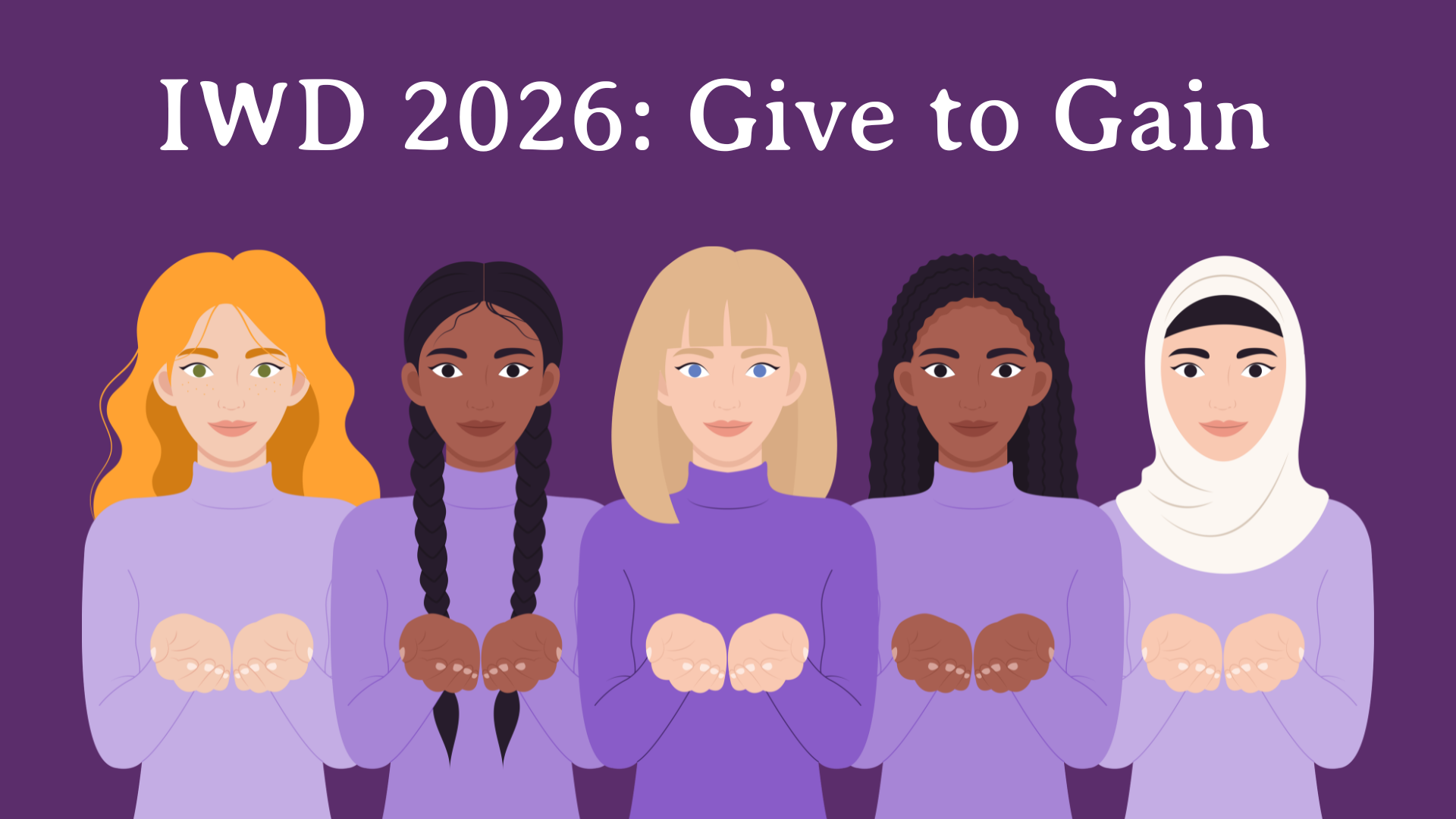
IWD 2026: Give to Gain
This year, the theme of International Women’s Day is “Give to Gain,” which encourages a mindset of generosity and collaboration. This theme asks: What can we give to help advance women and girls? It’s a worldwide call to contribute in some way, whether that be donating to women’s organizations, giving time to mentorship programs, volunteering with a like-minded group, or supporting through daily actions that challenge discrimination or question bias.
Ways to Support Women and Girls in 2026
If you’re here, reading this article, it probably means you have a vested interest in supporting women and girls in 2026. We’ve got some tips on turning that interest into meaningful action.
1. Donate to an organization that supports women
We get it—these are economically trying times. But, if you have the means, donating money to organizations working for women is a great way to show up for IWD 2026.
Here are some of the Starling Social team’s favourite organizations to support:
For Local Impact
- Fort Garry Women’s Resource Centre: A not-for-profit, feminist organization supporting women and gender diverse people to engage in healthy life choices for themselves and their families through innovative and responsive programming and excellence in service.
- Manitoba Association of Women's Shelters (MAWS): A collective of 11 shelters providing 24/7 crisis lines and support for those experiencing violence in Manitoba.
- Ka Ni Kanichihk: Provides culturally rooted healing, education, and mentorship programs for Indigenous women and families.
For International Support
- Plan International’s ‘Because I am a Girl’: Join a growing movement of girls’ rights champions who are committed to helping girls step into their power and shape their communities.
- United Nations Foundation WithHer Fund: Provides flexible funds to local, high-impact, frontline, grassroots women’s rights organizations that have been tackling gender-based violence (GBV)—particularly violence against women and girls (VAWG)—in their communities.
Or, check out the Canadian organizations from the IWD 2026 giving directory.
2. Give Time
Finding worthwhile organizations to mentor for or volunteer with is an excellent way to support IWD 2026. Find a charity, group, or cause that aligns with your values and consider offering your time or skills. There are so many ways to volunteer, and so many organizations that rely on volunteer support to create meaningful change.
Volunteer Manitoba is a great resource to start your volunteer journey.
If you’re curious about mentorship, IWD is hosting a free virtual webinar that explores what #GivetoGain looks like in practice through the lens of mentorship and leadership communication.
3. Support Women-Owned Businesses and Organizations
Supporting women-owned businesses intentionally and consistently is a tangible way to invest in economic equity. Consider purchasing from a local, women-owned business this month, or, find some new businesses to follow, engage with, positively review and share online.
Check out the WeMB directory which highlights women+ owned businesses.
And the black-owned Manitoba business directory.
Or search for similar resources in your city.
4. Educate Yourself & Others
Part of showing up for women is staying informed about the injustices that affect women locally and globally, and recognizing that these issues deserve our attention.
It can also mean investing in your own learning through Diversity, Equity, and Inclusion training or other educational opportunities that deepen your understanding of systemic inequality.
And don’t keep it to yourself! When you learn something new, share it with others through conversations, resources, or thoughtful discussions to create meaningful ripple effects.
We recommend Equality Now and UN Women for some great online resources.
5. Moving Beyond Performative Support
It’s so easy to pay lip service to supporting women, but the real magic lies in action. Sometimes, that means taking an honest look at ourselves, our communities, and the standards we are willing to uphold. At a time when women’s rights are under attack from every angle, personal and collective accountability to action is essential.
Accountability to action could look like:
- Voting for leaders who prioritize women’s rights, and then holding them accountable to the policies and programs that they promised.
- Expecting transparency from businesses that claim to value equality, including equitable pay and representation.
- Not laughing at jokes made at the expense of women.
- Refusing to unfairly criticize women.
- Organizing or attending protests, rallies, or other grassroots efforts.
- Calling Out and Calling In. This means recognizing misogynistic or harmful behaviour in others, naming it, and then demanding better (and explaining what better looks like).
- Understanding that silence in the face of oppression is complacency.
At the end of the day, everyone’s capacity looks a little different, and everyone has something different to give. Not every action needs to be large or public to matter. But meaningful change happens when each of us chooses to participate in building a safer, more equitable world for women and girls.